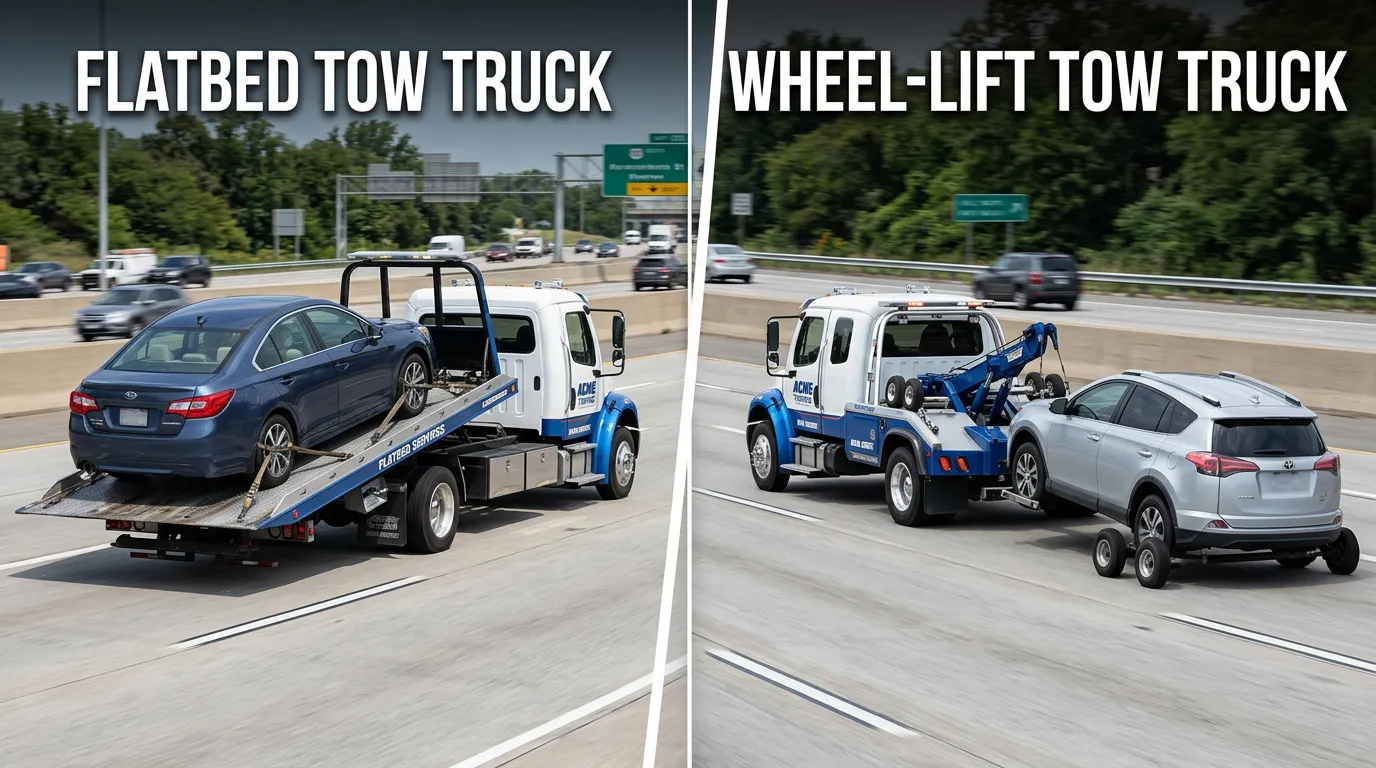
For most vehicles in 2026, flatbed towing is the safest and most recommended option. It keeps all four wheels off the ground, eliminating any risk of drivetrain damage or road contact. Wheel-lift towing is cheaper and faster for short-distance moves of front-wheel-drive vehicles in running condition.
- Flatbed towing is always the safest choice — your car rides on the truck, not the road
- AWD and 4x4 vehicles MUST use flatbed towing to avoid drivetrain damage
- Wheel-lift is fine for short tows of front-wheel-drive cars
- Flatbed costs 30-50% more but provides much better protection
How Each Towing Method Works
Flatbed Towing (Rollback)
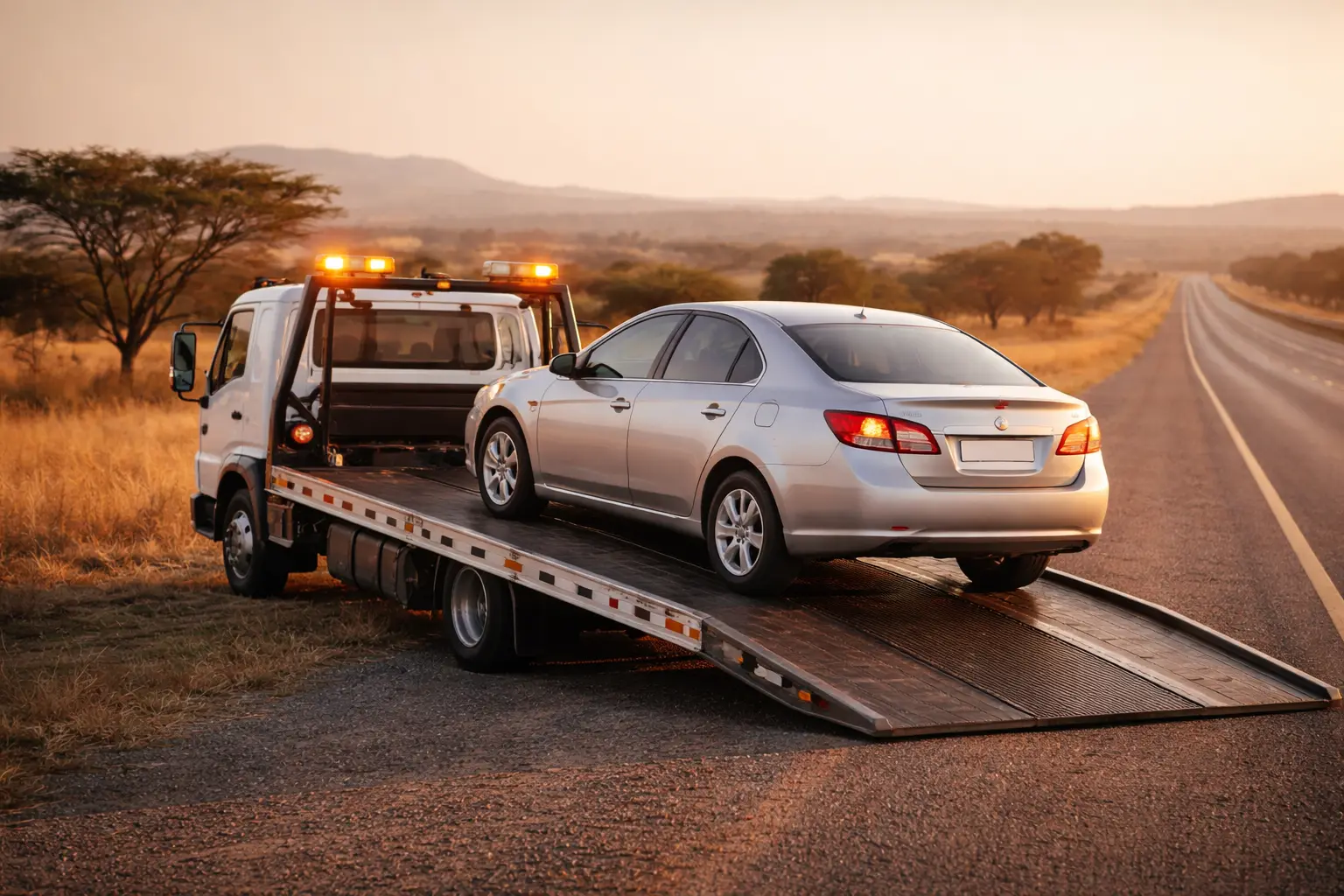
A flatbed tow truck has a long, flat platform (the bed) that tilts down to ground level. Your vehicle is winched up onto the platform, secured with straps and chains, and transported with all four wheels completely off the ground. The vehicle rides on the truck like cargo — no rolling, no road contact, no stress on the drivetrain.
In South Africa, flatbed trucks are sometimes called "rollbacks" because the bed rolls back to create a ramp. This is the method used by most new car dealerships for transporting vehicles, and it's the standard for luxury vehicle transport.[1]
Wheel-Lift Towing
A wheel-lift tow truck uses a metal yoke (a hydraulic arm) that cradles either the front or rear wheels and lifts them off the ground. The other set of wheels stays on the road and rolls as the vehicle is towed. This is the classic tow truck method you see in movies.
It's quick to hook up and doesn't require a ramp or winch, making it popular for short-distance towing and vehicle relocation. However, because two wheels remain on the road, it's not suitable for all vehicles.
When to Choose Flatbed Towing
Flatbed towing is the better (or only safe) option in these situations:
- AWD or 4x4 vehicles: Towing with any wheels on the ground can damage the transfer case, differential, or AWD system. Fortuner, RAV4, Tiguan, X-Trail, and all bakkies with 4WD should always use flatbed.
- Luxury vehicles: BMW, Mercedes, Audi, Porsche — manufacturers recommend flatbed towing to protect sensitive drivetrain components and expensive bodywork.
- Lowered or modified vehicles: Cars with aftermarket suspension, body kits, or low ground clearance can scrape or get damaged during wheel-lift towing.
- Accident-damaged vehicles: If wheels are bent, suspension is broken, or the car can't roll freely, flatbed is the only safe option.
- Long-distance towing: Over 50km, the wear on tyres and drivetrain during wheel-lift towing becomes a concern. Flatbed eliminates this entirely.
- Automatic transmission: Some older automatic vehicles can suffer transmission damage if towed with drive wheels on the ground for extended distances.
We offer flatbed towing across Pretoria for all vehicle types.
When Wheel-Lift Towing Is Fine
Wheel-lift towing is perfectly acceptable in these situations:
- Front-wheel-drive vehicles (short distance): A VW Polo, Toyota Corolla, or Honda Civic being towed rear-first for a short distance is completely safe.
- Running vehicles being relocated: If the car runs fine but needs to be moved (e.g., from a parking lot or impound), wheel-lift is quicker and cheaper.
- Short distances (under 15km): For a quick tow to a nearby workshop, wheel-lift minimises cost and time.
- Standard manual transmission vehicles: Manual cars can generally be towed in neutral without drivetrain concerns for short distances.
Cost Difference: Flatbed vs Wheel-Lift
| Factor | Flatbed Towing | Wheel-Lift Towing |
|---|---|---|
| Base Price (local) | R1,200 - R3,500 | R850 - R2,000 |
| Per km (long-distance) | R18 - R25/km | R15 - R20/km |
| Loading Time | 10-15 minutes | 5-8 minutes |
| Vehicle Protection | Maximum | Good (with limitations) |
| Risk of Additional Damage | Very low | Low to moderate |
The 30-50% premium for flatbed towing is well worth it when you consider the potential cost of drivetrain damage from improper towing. Replacing an AWD transfer case can cost R15,000-R40,000+ — far more than the flatbed premium.[2]
Our Recommendation
We recommend flatbed towing for the majority of situations. Here's why:
- Modern vehicles are complex. Most new cars have electronic stability systems, AWD components, and sensitive transmissions that can be affected by improper towing.
- Insurance considerations. If your vehicle is damaged during towing and you used an inappropriate method, your insurance claim could be complicated.
- Peace of mind. With flatbed towing, your vehicle is fully secured on the truck. No worries about road debris, potholes, or additional damage during transport.
That said, we have both flatbed and standard tow trucks available. When you call, we'll recommend the right method based on your vehicle type, condition, and the distance involved. We'll never upsell you on a flatbed if wheel-lift is perfectly safe for your situation.
Frequently Asked Questions
Can any car be towed with a wheel-lift?
No. AWD and 4WD vehicles should not be towed with a wheel-lift unless dollies are used under the remaining wheels. Lowered vehicles, cars with severe accident damage, and vehicles with locked-up transmissions also require flatbed towing.
Is flatbed towing safer than wheel-lift?
Yes. Flatbed towing is objectively safer because all four wheels are off the ground and the vehicle is fully secured on the truck bed. There's no risk of drivetrain damage, tyre wear, or road debris hitting the vehicle.
Will towing damage my car?
Properly done towing should never damage your car. The risk of damage comes from using the wrong towing method for your vehicle type (e.g., wheel-lift on an AWD vehicle). A professional towing service will always use the correct method for your specific vehicle.
How should a Toyota Hilux/Fortuner be towed?
Toyota recommends flatbed towing for Hilux 4x4 and Fortuner models. Towing these vehicles with wheels on the ground can damage the 4WD system. Hilux 4x2 models can be towed with the rear wheels lifted for short distances, but flatbed is still preferred.
Not Sure Which Towing Method You Need?
Call us and we'll advise you based on your vehicle make, model, and situation. We have both flatbed and standard tow trucks ready to go 24/7.
Get Expert AdviceSources
- AA South Africa. "Safe Towing Methods for Modern Vehicles." aa.co.za
- AutoTrader South Africa. "Vehicle Repair Cost Guide 2026." autotrader.co.za
![Pretoria's Most Dangerous Roads and Intersections for Breakdowns [2026]](/images/blog-pretoria-dangerous-roads-breakdowns.webp)